
Borkum Riffgrund 3 Impact Report Released
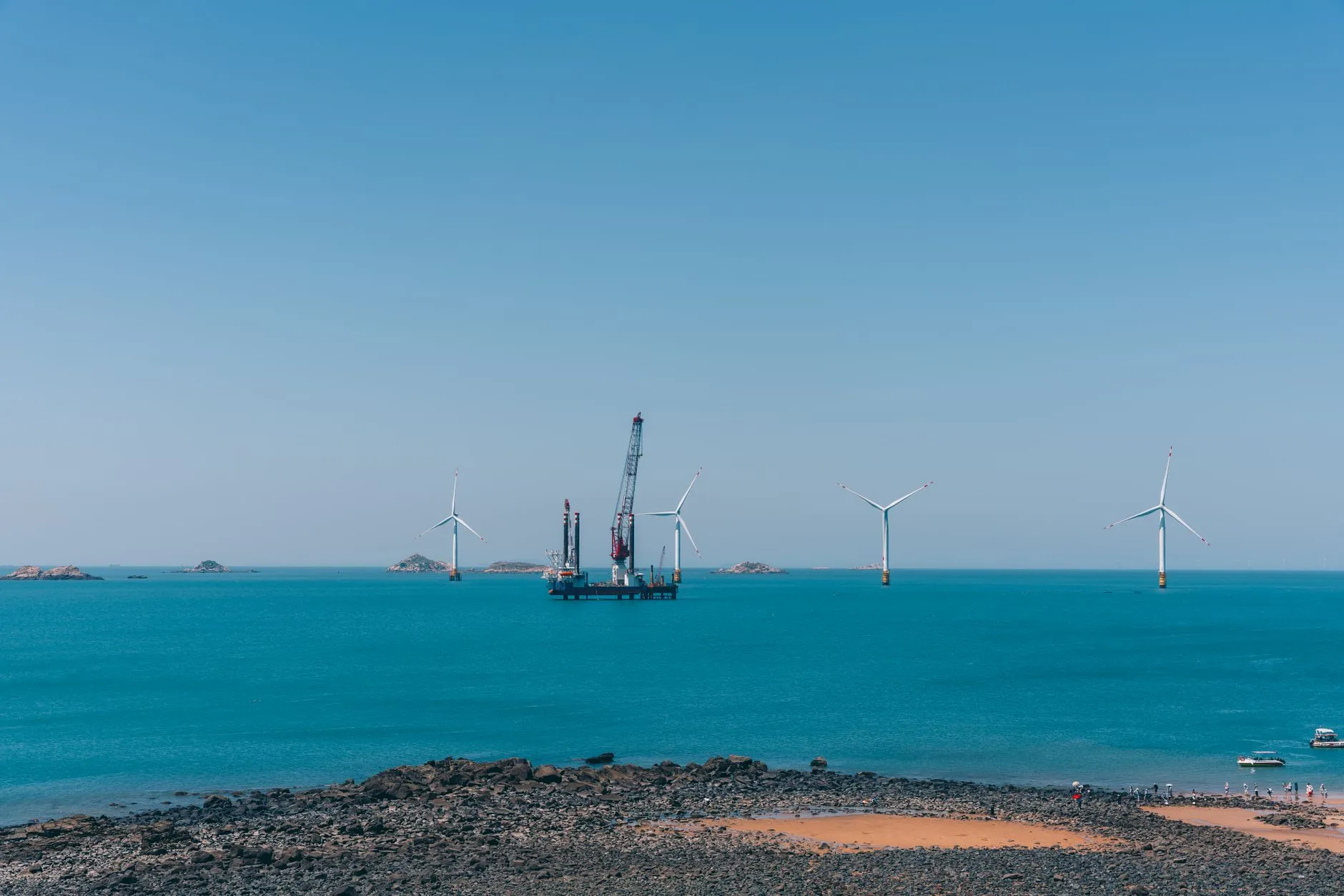
Germany's offshore wind capacity has taken a significant step forward. Borkum Riffgrund 3, a 913 MW wind farm in the North Sea, is now generating power for nearly one million homes. Importantly, the project was built without government subsidies and operates through long-term industrial contracts. For UK businesses watching European energy markets, this offers a useful reference point for how large-scale renewable generation is evolving across the North Sea.
The wind farm sits roughly 72 kilometres off the German coast. It covers about 75 square kilometres of seabed and uses 83 Siemens Gamesa turbines, each rated at 11 MW. Ørsted and Nuveen Infrastructure own the project in equal shares. Together, they have created what is now Ørsted's largest German offshore wind asset.
The project's newly published impact report adds detail on three areas: energy security, industrial decarbonisation, and construction techniques designed to reduce environmental disruption. These themes matter beyond Germany. UK manufacturers and suppliers increasingly face similar questions about procurement, carbon reporting, and how renewable energy fits into supply chain planning.
How the project came together and reached operation
Borkum Riffgrund 3 started as three separate schemes awarded to Ørsted in German auctions held during 2017 and 2018. In 2019, the company merged them into a single development. The wind farm sits next to two earlier projects, Borkum Riffgrund 1 and 2, in the same North Sea zone.
Construction work began in summer 2023. Initially, commissioning was expected earlier, but grid connection delays involving the DolWin5 transmission link pushed the schedule back. First power reached the German grid in December 2025. The remaining turbines came online during early 2026, and full commercial operation was confirmed on 31 August 2026. A formal inauguration followed in September.
The project was developed entirely without subsidies. Instead, Ørsted secured revenue through direct agreements with industrial buyers. This represents a shift in how offshore wind is financed. Subsidy-free models rely on predictable corporate demand rather than government support.
With Borkum Riffgrund 3 operational, Ørsted's total German offshore wind capacity now stands at approximately 2.5 GW. Germany's national offshore wind sector passed 10 GW in 2026. Consequently, this single project accounts for nearly a tenth of the country's offshore wind capacity.
Unsubsidised financing and corporate power agreements
The subsidy-free model changes the commercial dynamic. Without fixed government tariffs, developers need buyers willing to commit to long-term contracts. For Borkum Riffgrund 3, industrial customers provided that anchor demand. These power purchase agreements lock in renewable electricity supply for periods often stretching to a decade or more.
Covestro, a German chemicals manufacturer, signed a ten-year contract for 100 MW from the wind farm. Agreements like this serve two purposes. Manufacturers gain access to predictable renewable power, which helps them meet carbon reduction targets and satisfy supply chain requirements. Meanwhile, developers secure the revenue certainty needed to finance construction without public funding.
For UK businesses, the model is familiar. Corporate power purchase agreements are becoming standard practice, particularly for firms with ambitious net-zero commitments or those bidding for public sector contracts under PPN 06/21. The contracts offer price stability and carbon accounting benefits, but they also require careful negotiation around volume risk, balancing responsibilities, and grid connection timelines.
The Borkum Riffgrund 3 approach shows how large European manufacturers are contracting directly with renewable generators. As a result, supply chains are starting to demand similar proof points from UK suppliers. If your customers are procuring clean power at scale, they may expect you to demonstrate equivalent action. In addition, tender submissions increasingly require evidence of renewable electricity use, carbon accounting processes, and decarbonisation plans.
Direct procurement agreements also affect carbon reporting. When you buy power under a long-term contract, you can often claim location-based emissions reductions more credibly than through standard renewable tariffs. However, additionality questions remain. Did your contract genuinely add new renewable capacity, or simply redirect power that would have been generated anyway? These details matter for Scope 2 accounting and for satisfying due diligence in tenders or investor reviews.
Industrial decarbonisation and supply chain expectations
Borkum Riffgrund 3 exists primarily to supply industrial customers. The impact report frames the project as a tool for decarbonising manufacturing processes that rely on large, continuous electricity loads. Chemicals, steel, and automotive sectors are typical buyers. These industries face regulatory pressure, investor scrutiny, and customer demands for lower-carbon products.
UK manufacturers encounter similar pressures. Scope 3 emissions from purchased electricity often dominate carbon footprints. Switching to renewable power addresses Scope 2, but it also influences Scope 3 calculations when suppliers or customers assess your product's embedded carbon. Furthermore, public sector buyers now require carbon reduction plans as a condition of contract award. Demonstrating renewable electricity procurement is a basic but necessary component of those plans.
The shift to industrial contracts also signals where investment is heading. Developers are building projects around anchor customers rather than speculative grid sales. This means availability of renewable power is increasingly tied to long-term commitments. Businesses that delay procurement decisions may find themselves competing for limited contract availability as industrial buyers lock in supply.
European procurement norms are converging. German manufacturers contracting offshore wind at scale set expectations for their suppliers, including UK firms exporting components, materials, or services. If a customer requires you to demonstrate renewable energy use or emissions intensity data, they are likely responding to their own supply chain obligations. Therefore, understanding how renewable procurement works helps you anticipate these requests and respond credibly.
Moreover, the emphasis on industrial decarbonisation reflects broader policy direction. The EU's Carbon Border Adjustment Mechanism will impose costs on carbon-intensive imports. UK exporters to European markets need to demonstrate lower emissions intensity to remain competitive. Renewable electricity is one lever among many, but it is visible, measurable, and increasingly expected.
Technical approach and lower-noise installation methods
Ørsted's impact report highlights OSONIC, described as a low-noise foundation installation method designed to reduce underwater noise during pile driving. Traditional offshore wind construction creates significant acoustic disturbance, which affects marine mammals and fish populations. Regulators in both Germany and the UK are tightening noise limits to protect marine environments.
OSONIC represents one technical response to those constraints. While details vary, low-noise methods typically involve bubble curtains, damping systems, or alternative foundation designs. The specific innovation matters less than the broader trend: offshore wind developers must now demonstrate environmental mitigation beyond standard impact assessments.
For UK businesses involved in offshore construction supply chains, this has practical implications. Contractors and equipment suppliers need to offer solutions that meet stricter environmental standards. Tendering processes increasingly require evidence of noise mitigation capabilities, marine monitoring protocols, and compliance with evolving regulations.
Environmental performance also affects project timelines. Delays in obtaining marine licences or consents can stall construction. Developers prefer suppliers who understand regulatory requirements and can demonstrate credible mitigation measures upfront. Consequently, firms that invest in lower-impact methods gain a competitive advantage in a tightening market.
Additionally, corporate buyers care about the environmental footprint of the power they purchase. Industrial customers signing long-term contracts want assurance that construction meets high environmental standards. This creates reputational risk if construction methods attract regulatory or public criticism. Developers mitigate this by emphasising techniques like OSONIC in impact reports and stakeholder communications.
Core details about capacity, output, and grid integration
- The wind farm has an installed capacity of 913 MW, making it one of Germany's largest offshore wind projects and Ørsted's biggest German asset.
- It uses 83 Siemens Gamesa turbines, each with an 11 MW rating and a 200-metre rotor diameter, installed across approximately 75 square kilometres of seabed.
- The project is expected to supply enough electricity for close to one million German households annually, based on typical consumption patterns.
- Ørsted and Nuveen Infrastructure share ownership equally, with the project developed and financed without government subsidies or feed-in tariffs.
- Commissioning was delayed by grid connection work on the DolWin5 transmission link, but full commercial operation was confirmed in August 2026, with formal inauguration in September.
- The wind farm increases Ørsted's total German offshore wind capacity to approximately 2.5 GW and represents nearly a tenth of Germany's national offshore wind capacity, which surpassed 10 GW in 2026.
- Revenue is secured through long-term corporate power purchase agreements with industrial customers, including a ten-year contract with Covestro for 100 MW.
What the impact report reveals about wider commercial strategy
Ørsted's impact report is not merely a technical summary. It positions Borkum Riffgrund 3 as a case study in how large offshore wind projects can serve multiple objectives simultaneously: energy security, industrial decarbonisation, and environmental stewardship. The framing matters because it reflects how developers now communicate value to investors, customers, and regulators.
Energy security has returned as a priority across Europe following recent volatility in fossil fuel markets. Offshore wind reduces dependence on imported gas and strengthens domestic generation capacity. For industrial buyers, this translates into more stable long-term pricing and reduced exposure to commodity price swings.
However, energy security also has a supply chain dimension. Businesses reliant on stable electricity supply face operational risk if grid capacity becomes constrained or prices spike unexpectedly. Long-term renewable contracts mitigate some of that risk, particularly if contracts include price floors and ceilings or fixed-price terms.
Furthermore, the report emphasises European value creation. This language signals concern about supply chain resilience and local economic impact. Developers and their customers increasingly face scrutiny over where components are made, where jobs are created, and whether projects support domestic industrial capacity. UK suppliers to offshore wind projects should expect similar questions.
The report also addresses construction environmental impact directly. By highlighting OSONIC, Ørsted acknowledges that offshore wind is not without environmental trade-offs. Regulators and NGOs monitor marine construction closely. Developers who demonstrate credible mitigation measures are better positioned to secure future consents and maintain social licence to operate.
Where to find detailed technical and policy information
Ørsted has published the full impact report on its corporate website, covering energy security, industrial decarbonisation, and construction methods in greater depth. The report is available through Ørsted's white papers section.
For context on Germany's offshore wind policy and capacity targets, the German Federal Ministry for Economic Affairs and Climate Action publishes regular updates on renewable energy deployment and grid integration. UK businesses exporting to German markets or tracking European renewable energy trends will find useful benchmarking data there.
The Department for Energy Security and Net Zero provides comparable information on UK offshore wind planning, contracts for difference, and grid connection processes. Understanding both markets helps businesses navigate cross-border opportunities and supply chain expectations.
Additionally, UK firms involved in offshore wind supply chains should monitor The Crown Estate's leasing rounds and seabed planning, which determine where and when new projects will be developed around the UK coast.
Practical considerations for UK businesses responding to similar trends
Borkum Riffgrund 3 illustrates several shifts that affect UK businesses directly. Subsidy-free offshore wind is no longer experimental. It is becoming the default model for large projects, particularly where industrial buyers provide anchor demand. This changes procurement dynamics and creates opportunities for firms that understand long-term contracting.
If you supply power-intensive manufacturers, expect questions about renewable electricity availability, carbon intensity, and price stability. Corporate buyers are moving away from spot markets toward structured contracts. Being able to discuss power purchase agreements, additionality, and carbon accounting gives you credibility in those conversations.
For businesses in offshore construction or engineering supply chains, environmental performance is now a tender requirement, not a differentiator. Noise mitigation, marine monitoring, and regulatory compliance are baseline expectations. Investing in capabilities that meet tightening standards makes you a more attractive supplier as the sector scales.
Carbon reporting obligations are also tightening. If your customers or investors require Scope 2 and Scope 3 disclosures, demonstrating renewable electricity procurement is straightforward and visible. However, reporting standards are becoming more rigorous. You need to show how power was sourced, whether contracts are additional, and how emissions reductions are calculated. ESG compliance support can help you structure disclosures that withstand scrutiny.
Public sector suppliers face specific requirements. PPN 06/21 mandates carbon reduction plans for contracts above certain thresholds. Renewable electricity procurement is a common component of credible plans. If you have not yet addressed this, competitors who have will hold an advantage in tender evaluations. Carbon reporting programmes designed for SMEs offer structured pathways to meet these obligations without diverting excessive resource from operations.
Finally, watch for customer supply chain requirements tightening in parallel with their own commitments. If a major customer contracts renewable power at scale, they will likely extend similar expectations to suppliers. Preparing now positions you to respond quickly when those requests arrive. Sustainable procurement guidance helps you understand what customers are likely to ask and how to evidence your response credibly.