
Plant Diversity and Climate Resilience
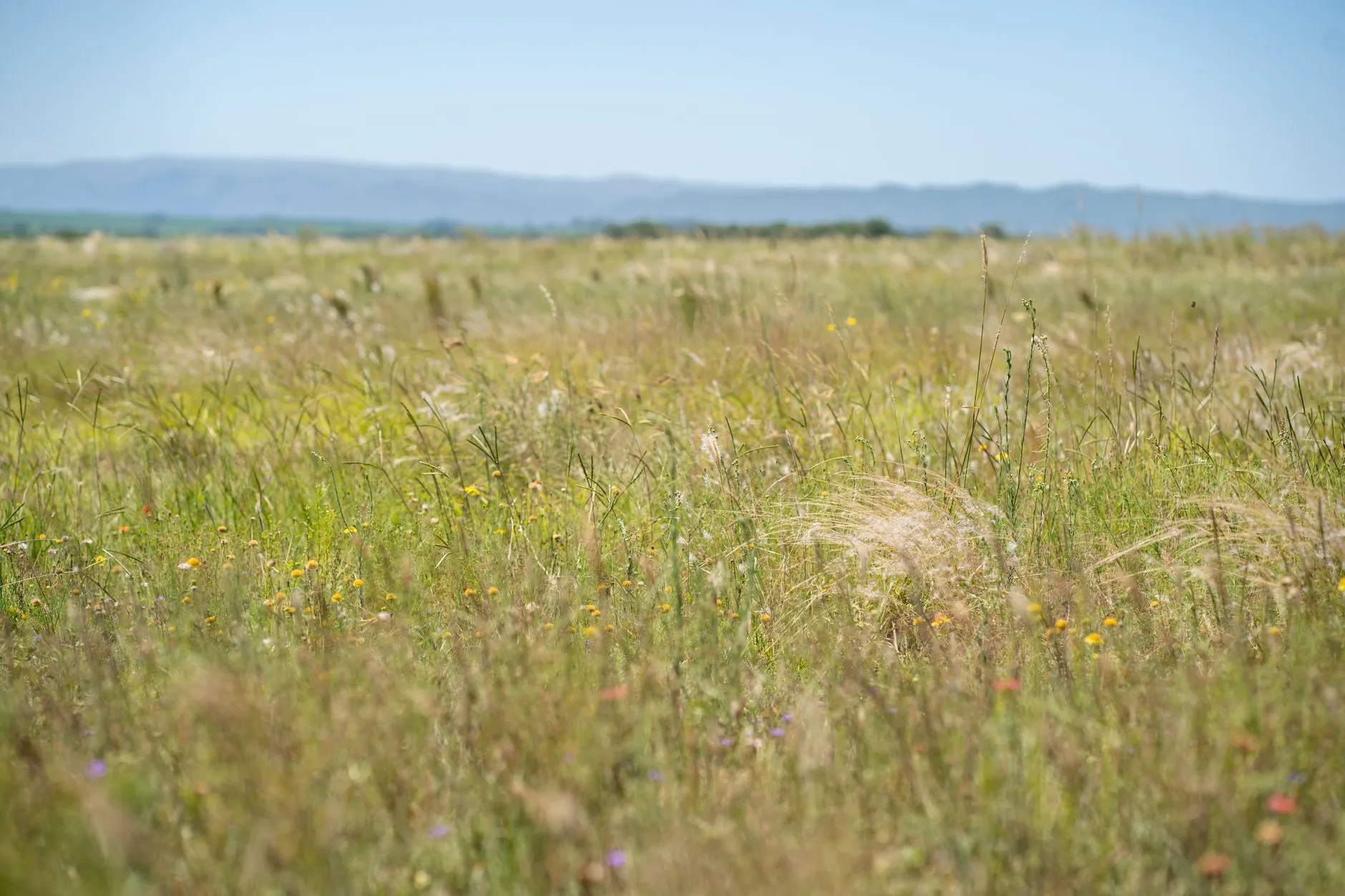
Grasslands cover about a third of the Earth's land surface. They hold roughly a third of all carbon stored on land. Now a study published in the Proceedings of the National Academy of Sciences warns that losing plant variety in these ecosystems could significantly weaken their ability to absorb carbon dioxide from the atmosphere.
Researchers at the Potsdam Institute for Climate Impact Research and Kiel University modelled what happens when grassland plant diversity declines under different climate scenarios. Their findings suggest that by 2050, grasslands with sharply reduced plant variety could absorb around 15% less CO₂ through photosynthesis compared to diverse grasslands. In the hardest-hit regions, that figure could reach 50%.
For UK businesses working on net zero commitments or investing in nature-based carbon removal, this matters. Grassland carbon projects depend on healthy ecosystems delivering predictable results. Consequently, biodiversity loss introduces a material risk to carbon storage assumptions. Moreover, many UK supply chains rely on livestock and forage production from grasslands. If these systems become less productive under climate stress, costs rise.
What the research modelled and why it differs from earlier work
This is the first time a global vegetation model has tested how plant diversity loss affects both carbon uptake and soil storage across the world's grasslands. Previous studies documented the link between species richness and carbon in experimental plots. However, this research scaled that relationship up to continental and global levels.
The team compared two scenarios. In one, plant diversity remains stable. In the other, diversity falls sharply. Both scenarios assumed warming stays below 2°C, in line with Paris Agreement targets. The model then estimated carbon uptake through photosynthesis and tracked changes in soil organic carbon over time.
Results showed that maintaining plant diversity keeps grasslands more productive. Diverse plant communities use resources more efficiently. They also recover better from drought or heat stress. When diversity drops, these benefits disappear. As a result, the land absorbs less CO₂ each year.
Under the low-diversity scenario and a below-2°C warming pathway, the model projects approximately 11 billion tonnes less CO₂ uptake per year in 2050. That is roughly equivalent to current annual emissions from all global aviation and shipping combined. The scale of the potential loss underscores why biodiversity cannot be treated as separate from climate action.
Carbon storage, forage production and the business case for diversity
Grasslands matter commercially for several reasons. They provide grazing for livestock. They support rural economies. They also deliver carbon storage, which increasingly has a market value as companies seek verified carbon credits or meet supply chain sustainability requirements.
When plant diversity declines, grasslands store less carbon in the soil. They also produce less forage per hectare. For farmers and land managers, this means lower yields and higher vulnerability to weather shocks. For businesses buying agricultural products or investing in land-based carbon projects, it introduces performance risk.
Many UK companies now commit to net zero targets that include Scope 3 emissions from agriculture. Meeting those targets often requires investment in soil carbon sequestration or regenerative grazing systems. If the underlying ecosystems are losing diversity, the carbon benefits may not materialise as expected. Therefore, tracking and maintaining biodiversity becomes a due diligence issue, not just an environmental nicety.
The study also highlights regional variation. Some grasslands will see modest declines in carbon uptake. Others could lose half their photosynthetic capacity if diversity collapses. This variability matters for project planning. A carbon offset scheme in a biodiversity hotspot carries different risks than one in a degraded monoculture pasture.
Furthermore, the research suggests that restoring plant diversity can reverse some of these losses. Species-rich meadows recover productivity faster after drought. They build soil organic matter more quickly. They support pollinators and other beneficial insects that improve crop resilience nearby. Consequently, investing in biodiversity restoration can deliver multiple returns: carbon storage, risk reduction, and improved yields.
Grassland carbon and climate policy intersect with UK land use
Around 40% of UK agricultural land is permanent grassland. Much of it is species-poor ryegrass monoculture, managed intensively for silage or grazing. While productive in the short term, these systems store less carbon than diverse permanent pasture. They also rely heavily on nitrogen fertiliser, which carries its own emissions burden.
The UK government's Environmental Land Management schemes now pay farmers to restore species-rich grassland and improve soil health. These payments recognise that diverse grasslands deliver public goods: cleaner water, flood mitigation, carbon storage, and habitat for wildlife. However, uptake has been uneven. Many farmers face competing pressures to maximise output or lack the knowledge to manage complex plant communities.
For businesses involved in agricultural supply chains, this creates both risk and opportunity. Suppliers managing low-diversity grassland may face higher costs as fertiliser prices rise and carbon regulations tighten. Conversely, those investing in biodiversity restoration could access new revenue streams from carbon credits, ecosystem service payments, or premium markets for regeneratively produced meat and dairy.
The research also has implications for corporate nature investments. Companies buying biodiversity credits or funding habitat restoration need assurance that projects will deliver measurable outcomes. This study provides a clear mechanism: more plant species equals more carbon uptake and storage. That makes biodiversity a tangible, quantifiable input to carbon project performance, not a co-benefit that is difficult to value.
Five key points from the research
- Grasslands with sharply reduced plant diversity could absorb around 15% less CO₂ by 2050 compared to biodiverse grasslands, with some regions seeing declines up to 50%.
- Under a warming scenario that stays below 2°C, low-diversity grasslands may take up approximately 11 billion tonnes less CO₂ per year by mid-century.
- This is the first global vegetation model to test how plant diversity loss affects both carbon uptake through photosynthesis and soil carbon storage across all grasslands.
- Grasslands currently hold about one-third of terrestrial carbon stocks, making their productivity and resilience critical to global climate goals.
- Protecting and restoring plant diversity in grasslands offers measurable climate benefits alongside improved livestock forage and ecosystem resilience.
What UK businesses should consider now
If your supply chain includes livestock, dairy, or other grassland-dependent products, biodiversity risk affects your carbon footprint and operational resilience. Suppliers managing degraded grassland are more exposed to climate shocks and may struggle to meet future carbon reporting requirements. Engaging with them early to support regenerative grazing or meadow restoration can reduce Scope 3 emissions and improve supply security.
For companies investing in nature-based carbon removal, this research reinforces the need to assess project biodiversity baselines. A grassland carbon project in a species-poor monoculture will deliver less carbon uptake than one in a diverse, well-managed pasture. Therefore, due diligence should include plant species surveys and soil health assessments, not just baseline carbon measurements.
Public procurement frameworks increasingly require suppliers to demonstrate environmental performance. The government's Procurement Policy Note 06/21 on carbon reduction plans already pushes contractors to measure and cut emissions. As biodiversity reporting becomes more common, suppliers managing land will face similar scrutiny. Understanding how plant diversity affects your operations or supply chain positions you ahead of regulatory change.
Training and knowledge gaps remain a barrier. Many land managers lack confidence in identifying grassland species or understanding how diversity supports carbon storage. Our SBS Academy training programmes help businesses and their suppliers build the skills needed to assess biodiversity risk, design restoration interventions, and track outcomes against net zero commitments.
Finally, this study provides a clear evidence base for nature-positive investment decisions. Biodiversity is not a soft target. It drives measurable carbon outcomes, lowers operational risk, and supports long-term productivity. Businesses that integrate biodiversity into their climate strategies will be better positioned to meet net zero goals and adapt to a changing regulatory landscape.
Where to find more detail and authoritative guidance
The full study is available through the Proceedings of the National Academy of Sciences journal. The Potsdam Institute for Climate Impact Research has published a detailed summary on its website, including model methodology and regional projections.
For UK-specific guidance on grassland management and carbon storage, the Department for Environment, Food and Rural Affairs provides resources on Environmental Land Management schemes and soil health. The UK government website also hosts information on biodiversity net gain requirements for development projects, which increasingly overlap with carbon accounting.
The Intergovernmental Science-Policy Platform on Biodiversity and Ecosystem Services has published extensive assessments linking biodiversity loss to climate risk. These reports provide context for how ecosystem degradation undermines natural carbon sinks globally, including grasslands, forests, and wetlands.
Businesses seeking support with carbon reporting and ESG compliance can access tools and advisory services tailored to UK SMEs navigating net zero commitments and supply chain sustainability requirements.