
Rio Tinto and Shougang Launch Carbon Capture Trial Facility
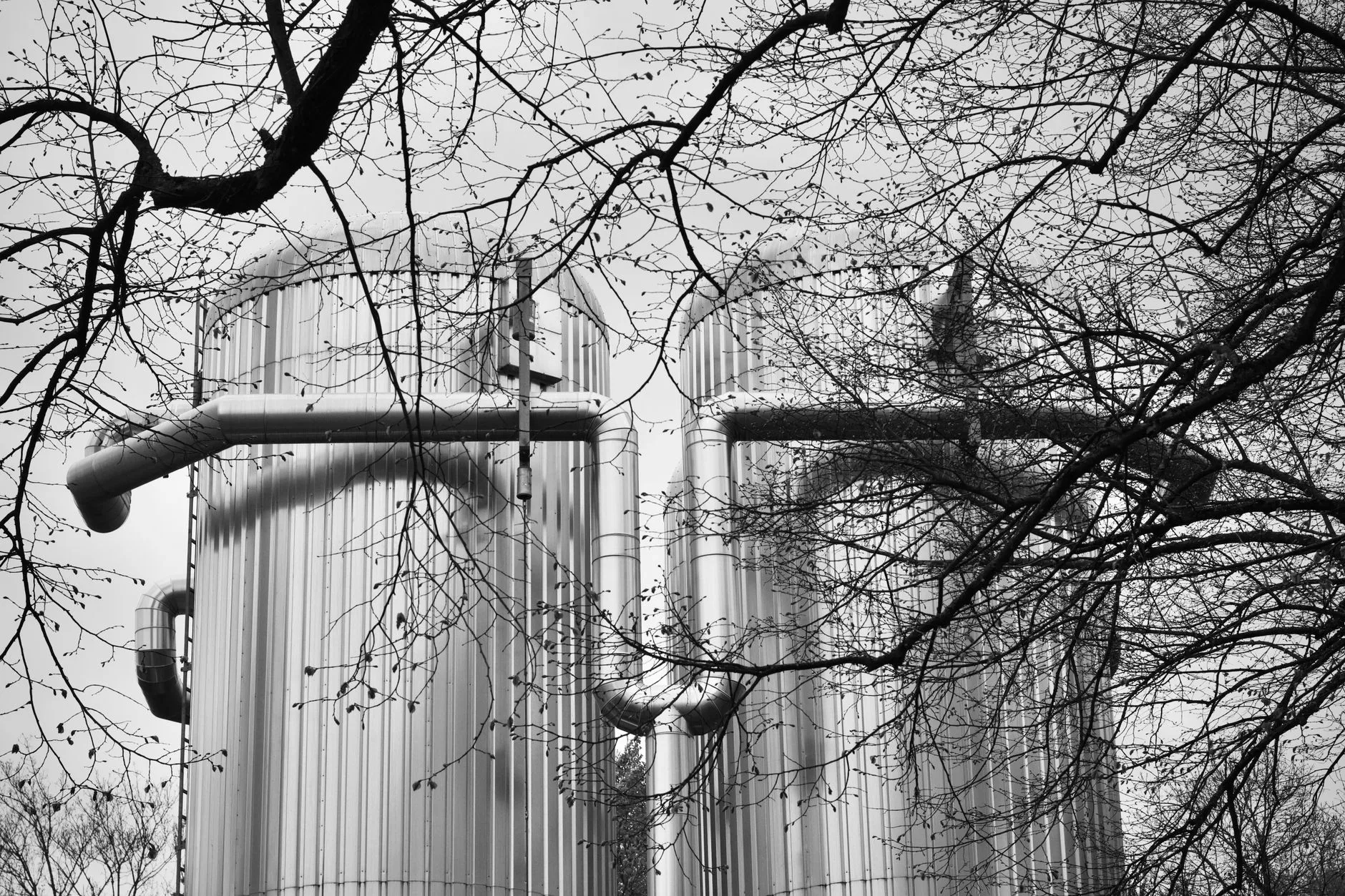
A carbon capture facility at a Chinese steelworks has started operating at industrial scale. Rio Tinto and Shougang Group commissioned the plant in September 2024 at Shougang's Jingtang steelmaking site in Caofeidian, Tangshan. The facility captures CO₂ directly from blast furnace gas and is designed to process up to 3,000 cubic metres of gas per hour.
For UK manufacturers working through their own emissions challenges, this development shows carbon capture technology moving from laboratory trials into working production environments. The trial matters because blast furnaces are among the most difficult industrial processes to decarbonise. Most emissions reduction strategies for heavy industry focus on fuel switching or electrification. This project tests whether carbon capture can be integrated into existing steelmaking operations without halting production.
The facility is expected to capture up to 10,000 tonnes of CO₂ annually. That volume is modest compared to total steel sector emissions, but the importance lies in proving the technology works inside an operating plant. The trial is designed to run long term, providing data on reliability, integration challenges, and commercial viability.
How the facility fits into a phased decarbonisation strategy
The new facility follows a deliberate progression from smaller tests to industrial-scale application. Rio Tinto and Shougang signed a partnership agreement in 2022 to research low-carbon technologies across the steel value chain. The collaboration began with work on low-carbon sintering and blast furnace optimisation.
In 2024, the partnership commissioned a smaller carbon capture pilot at the same Jingtang site. That earlier facility processed 100 cubic metres of blast furnace gas per hour. The new installation increases processing capacity thirtyfold, moving from controlled pilot conditions to full integration with production systems.
Rio Tinto committed US$3.5 million between 2023 and 2025 to support Shougang's carbon capture programme. The funding covered the initial 100 m³ per hour pilot and the design work for the larger 3,000 m³ per hour plant. Rio Tinto has also provided technical support as Shougang developed and scaled the capture technology.
The companies are now examining what to do with the captured CO₂. One option under investigation is converting captured emissions into syngas that can be recycled back into the steelmaking process. This approach could reduce the need for fresh carbon inputs while turning waste emissions into a useful industrial feedstock.
Why blast furnace emissions are difficult to eliminate
Blast furnaces produce iron by reducing iron ore with carbon, typically from coke. The process generates large volumes of CO₂ as a fundamental byproduct of the chemical reaction. Consequently, eliminating those emissions requires either replacing the entire production method or capturing the carbon as it forms.
Alternative ironmaking technologies such as hydrogen-based direct reduction are under development in several countries. However, these methods require substantial infrastructure investment and rely on low-carbon hydrogen supply at scale. Most existing steelmaking capacity worldwide still uses blast furnaces, particularly in China, which accounts for more than half of global steel production.
Carbon capture offers a potential pathway to reduce emissions from existing blast furnace operations without requiring a complete production system overhaul. Nevertheless, the technology must prove it can operate reliably in high-temperature industrial environments, integrate with existing gas management systems, and deliver emissions reductions at acceptable cost.
The Jingtang facility tests all three requirements simultaneously. By capturing CO₂ from blast furnace gas during normal production, the trial provides data on how the technology performs under real operating conditions rather than controlled pilot settings.
Commercial and regulatory context for UK businesses
UK manufacturers face increasing pressure to reduce Scope 1 emissions from their own operations. Carbon capture is being explored across several hard-to-abate sectors, including cement, chemicals, and metals processing. The government's industrial decarbonisation strategy includes support for carbon capture deployment in industrial clusters.
Several UK projects are in development or early operation. The HyNet and East Coast Clusters have secured government backing to build shared carbon capture and storage infrastructure. These facilities aim to provide capture and transport services to multiple industrial users in the North West and Humber regions. However, most UK projects are still at feasibility or construction stages.
For businesses considering carbon capture, the Jingtang trial demonstrates the importance of phased testing before full-scale deployment. Moving from small pilots to industrial trials allows companies to identify integration challenges, refine capture processes, and gather operational data before committing to large capital investments.
Regulatory requirements are also tightening. Companies participating in public procurement must demonstrate carbon reduction plans under PPN 06/21. Large businesses must report Scope 1, 2, and 3 emissions through Streamlined Energy and Carbon Reporting. Meanwhile, supply chain scrutiny is increasing as major buyers set net zero targets that require emissions reductions from suppliers.
Carbon capture may form part of a credible decarbonisation strategy for some operations, particularly where process emissions cannot be eliminated through fuel switching alone. However, businesses need to assess capture technology alongside energy efficiency improvements, fuel substitution, and process changes. Capture should address emissions that cannot be avoided through other means rather than serving as a substitute for fundamental efficiency measures.
What UK manufacturers can learn from the trial approach
The progression from 100 m³ per hour pilot to 3,000 m³ per hour industrial trial offers a useful model for technology deployment in heavy industry. Starting small allows companies to test equipment performance, identify integration issues, and build operational expertise before scaling up.
Collaboration between Rio Tinto and Shougang also shows how partnerships can share development costs and technical risks. Rio Tinto brought technical knowledge and financial support. Shougang provided the industrial site, operational expertise, and infrastructure for integration. This division of capability and risk is relevant for UK businesses considering technology trials.
Additionally, the focus on utilising captured CO₂ rather than simply storing it could improve project economics. If captured carbon can be converted into useful products or recycled into production processes, the cost burden of capture may be reduced. UK businesses should evaluate both storage and utilisation options when assessing carbon capture feasibility.
Long-term operation is another critical element. The Jingtang facility is designed to run continuously for research and trial purposes, not just as a short demonstration. This allows the operators to gather data on reliability, maintenance requirements, and performance over extended periods. UK businesses planning technology trials should build in sufficient operating time to understand how systems perform beyond initial commissioning.
Key details about the Jingtang carbon capture facility
- The facility is located at Shougang's Jingtang steelmaking base in Caofeidian, Tangshan, China, and was commissioned on 28 September 2024.
- It can process up to 3,000 cubic metres of blast furnace gas per hour and is designed to capture up to 10,000 tonnes of CO₂ annually.
- The plant follows a smaller 100 m³ per hour carbon capture pilot commissioned at the same site in 2024.
- Rio Tinto and Shougang signed a partnership in 2022 to develop low-carbon technologies across the steel value chain, including sintering, blast furnace optimisation, and carbon capture.
- The companies are investigating methods to convert captured CO₂ into syngas for recycling back into steelmaking processes.
- Rio Tinto committed US$3.5 million between 2023 and 2025 to support Shougang's carbon capture programme, covering pilot development and design work for the industrial-scale facility.
Evaluating carbon capture as part of your emissions strategy
Carbon capture is not a universal solution. It works best where process emissions are unavoidable and where capture can be integrated into existing operations without disrupting production. For many businesses, reducing energy consumption, switching to lower-carbon fuels, or changing production processes will deliver faster and cheaper emissions reductions.
However, certain sectors face process emissions that cannot easily be eliminated. Cement production releases CO₂ when limestone is heated. Chemical manufacturing generates emissions from feedstock reactions. In these cases, carbon capture may be necessary to achieve deep emissions cuts.
Before committing to capture technology, businesses should complete a full emissions assessment. Identify where emissions arise in your operations. Assess whether those emissions can be avoided through efficiency measures, fuel switching, or process changes. Consider capture only for residual emissions that cannot be addressed through other means.
Capital and operating costs for carbon capture remain high. Equipment must be sized correctly for your gas volumes and CO₂ concentrations. Integration with existing plant systems requires careful engineering. Captured CO₂ must then be compressed, transported, and either stored or utilised. All these steps add cost and complexity.
UK businesses can access support through the Industrial Energy Transformation Fund, which provides grants for energy efficiency and decarbonisation projects. The fund covers feasibility studies and capital investments for eligible technologies, including carbon capture. Additionally, the government is developing business models to support carbon capture projects in industrial clusters.
Businesses operating in industrial clusters may benefit from shared infrastructure for CO₂ transport and storage. Projects such as HyNet and the East Coast Cluster aim to provide services to multiple users, reducing the need for individual companies to develop their own storage solutions. Nevertheless, these facilities are still under development, and timelines for operational availability remain uncertain.
For companies not located near planned industrial clusters, carbon utilisation may offer an alternative to geological storage. Technologies exist to convert captured CO₂ into fuels, chemicals, building materials, and other products. However, these processes often require additional energy inputs and may not be economically viable without policy support or market incentives.
Businesses should also consider how carbon capture fits into compliance and reporting requirements. Captured and stored CO₂ can be deducted from Scope 1 emissions if the storage is permanent and verified. Carbon reporting compliance services can help ensure your emissions accounting correctly reflects capture activities and meets regulatory standards.
Where to find further technical and policy information
The UK government provides guidance on industrial decarbonisation and carbon capture through the Department for Energy Security and Net Zero. The department publishes policy updates, funding announcements, and technical resources for businesses exploring low-carbon technologies.
For detailed information on carbon capture business models and government support mechanisms, consult the CCUS business models guidance on GOV.UK. This resource explains how financial support will be structured for carbon capture projects in industrial settings.
The Institute of Environmental Management and Assessment offers professional guidance on emissions management and decarbonisation planning for UK businesses. IEMA publishes technical standards and case studies relevant to carbon reduction in industrial operations.
Businesses seeking practical support with emissions measurement, reduction planning, and net zero programme development can access structured guidance through the SBS net zero hub. The SBS Academy also provides training on carbon reporting, Scope 3 assessment, and supply chain decarbonisation strategies.