
Innovative reef project enhances wind turbine foundations
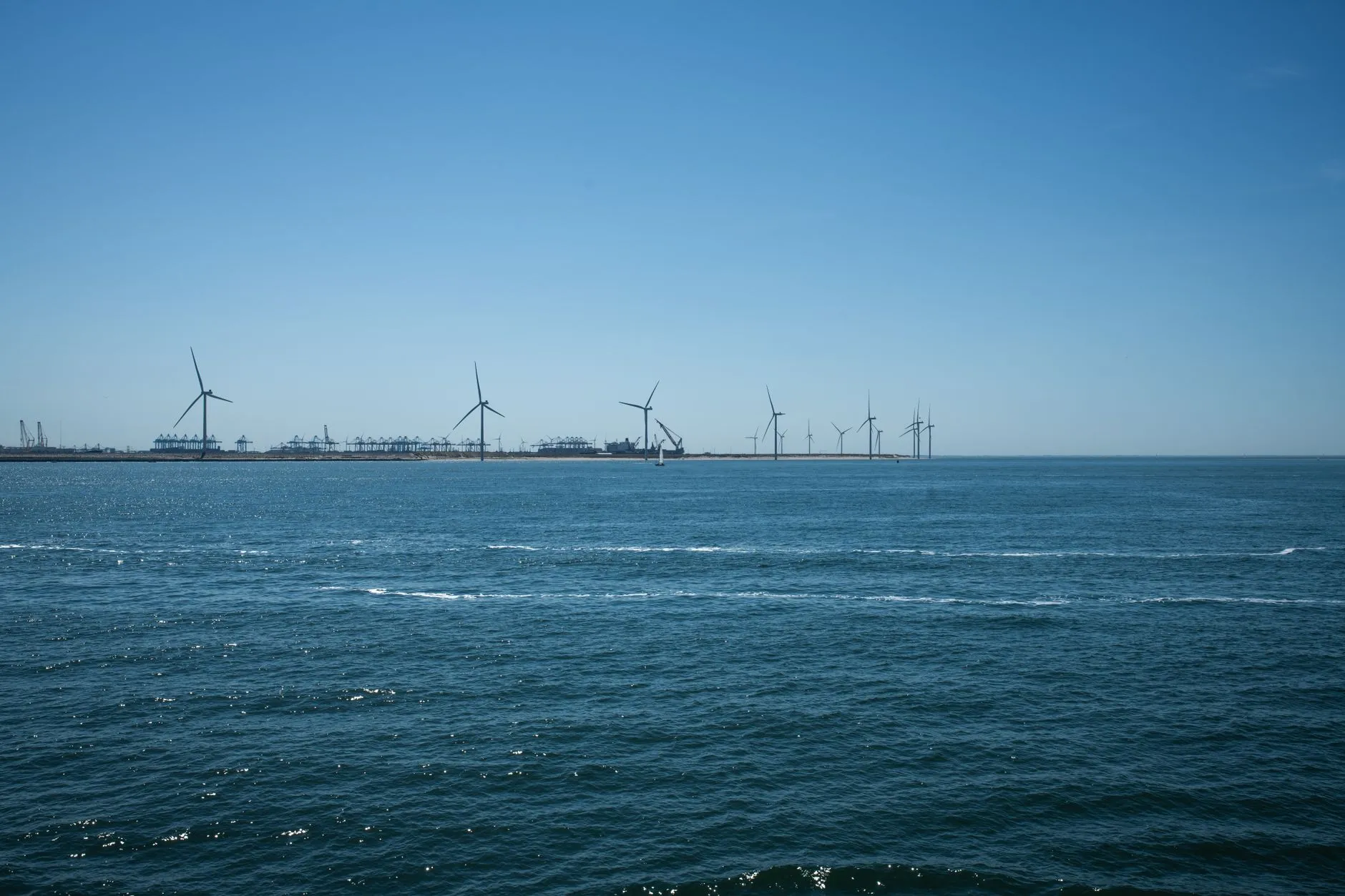
A single turbine off the Sussex coast now sits at the centre of what may be the world's largest artificial reef. Over 75,000 specially engineered concrete cubes have been placed around its base, turning routine industrial infrastructure into habitat for crabs, starfish, seabass, and oysters. The installation, completed at Rampion Offshore Wind Farm, marks the first time scour protection has been designed from the outset to support marine biodiversity at an operational wind site.
Scour protection is standard engineering. Every offshore turbine needs it. Wave action and tidal currents erode sediment around the foundation, so operators typically dump tonnes of rock around the base to stabilise the structure. The Rampion deployment takes that requirement and adds a second function. Instead of inert rubble, the site now has textured, hollow cubes with internal chambers and rough surfaces designed to encourage colonisation by reef-building species.
This matters because offshore wind is expanding fast across UK waters. Hundreds of turbines are planned or already operating. If scour protection can double as habitat without compromising foundation integrity or inflating costs, the cumulative ecological benefit could be substantial. The Rampion project offers a working example of what that looks like in practice.
Engineered cubes replace traditional rock armour
The cubes were developed by ARC Marine and installed by RWE as part of the Reef Enhancement for Scour Protection pilot, known as RESP. Deployment took place over several days using contractor Rohde Nielsen. The project secured a marine licence and placed all contracts before installation began, moving it beyond the pilot phase into full operational use.
Each cube measures between 15 and 35 centimetres. They are made from low-carbon, recycled concrete and feature a patented internal structure. Passageways run through the centre, creating shelter and attachment points for marine organisms. The rough exterior encourages algae and invertebrates to settle, mimicking the surface complexity of natural reefs.
According to RWE, the 75,000 cubes cover approximately 820 square metres of seabed around the turbine base. However, the three-dimensional structure creates around 25,000 square metres of usable habitat surface area. That's a significant multiplication of available space compared to flat rock placement.
The design targets species already present in the area. European seabass use the crevices as nursery habitat. Brown crabs shelter inside the chambers. Common starfish attach to the textured surfaces. Oysters and other filter feeders can settle on exposed faces. The structure is intended to function as a reef rather than simply a piece of coastal defence.
Rampion site provides first operational test case
Rampion Offshore Wind Farm operates off the south coast of England near Sussex. It has been generating power for several years, which makes this deployment distinct from new-build projects. The cubes were retrofitted around an existing turbine, demonstrating that the approach can be applied to operational sites as well as new installations.
The project received co-funding from Innovate UK, reflecting its status as an engineering trial with broader application potential. Previous studies and smaller deployments informed the cube design, but this marks the first full-scale use of eco-engineered scour protection at a working offshore wind farm.
Performance will be judged on two criteria. First, the cubes must continue to protect the turbine foundation from erosion as effectively as traditional rock armour. Structural failure would compromise the turbine and invalidate the approach. Second, biodiversity gains must be measurable over time. Monitoring will track species colonisation, biomass, and habitat use to determine whether the ecological benefits are real or theoretical.
Early reporting suggests the reef is already established, though it is too soon to assess long-term outcomes. Settlement by mobile species such as crabs and starfish can occur quickly. Reef-building organisms like oysters and mussels take longer to establish stable populations. Multi-year monitoring will be needed to determine whether the cubes deliver durable ecological value.
Offshore wind expansion creates demand for nature-positive design
The UK has committed to 50 gigawatts of offshore wind capacity by 2030. Meeting that target will require hundreds of new turbines and thousands of tonnes of scour protection. Current practice relies on quarried rock, which stabilises foundations but offers limited ecological function. Consequently, the industry faces growing pressure to reduce environmental impact and demonstrate compatibility with marine conservation goals.
Regulators and environmental groups increasingly expect renewable energy projects to contribute to biodiversity targets, not just carbon reduction. Planning consents for offshore wind farms now routinely include conditions related to seabed habitat, fisheries impact, and marine protected areas. Projects that can show measurable ecological benefit may find smoother approval processes and stronger public support.
For developers, this creates both risk and opportunity. Risk arises if biodiversity requirements delay projects or increase costs. Opportunity emerges if engineered habitats can be integrated into standard construction at marginal additional expense. The Rampion deployment tests whether that balance is achievable.
Supply chains are already responding. ARC Marine's cube design is now commercially available, and other firms are developing similar products. If demand grows, manufacturing scale could drive unit costs down, making eco-engineered scour protection competitive with traditional rock placement. That would remove a significant barrier to widespread adoption.
Meanwhile, the approach aligns with wider policy shifts. The government's environmental improvement plan includes targets for marine habitat restoration. Offshore wind projects that contribute to those targets may qualify for preferential treatment in future licensing rounds. Similarly, corporate ESG strategies increasingly emphasise nature-positive outcomes alongside carbon neutrality. Developers with demonstrable biodiversity credentials may gain advantage in investor relations and stakeholder engagement.
Commercial and compliance angles for UK businesses
The Rampion project has direct relevance for businesses involved in offshore energy, marine construction, and coastal infrastructure. Companies bidding for offshore wind contracts should expect biodiversity requirements to become standard procurement criteria. Demonstrating capability in eco-engineering may soon be necessary to remain competitive.
Manufacturers and suppliers of scour protection materials face a shifting market. Traditional rock armour remains the default, but demand for engineered alternatives is growing. Firms that can offer credible habitat-enhancing products may capture market share as developers respond to regulatory and reputational pressures. However, products must meet rigorous engineering standards and deliver measurable ecological outcomes, not just marketing claims.
For SMEs in the renewable energy supply chain, this represents both a skills challenge and a commercial opening. Understanding marine ecology, biodiversity net gain calculations, and habitat monitoring is becoming relevant to sectors that previously focused purely on mechanical and civil engineering. Training and advisory support in these areas will help firms position themselves effectively. Our SBS Academy offers training on environmental compliance and sustainable procurement for businesses navigating evolving regulatory landscapes.
Businesses involved in carbon reporting and net-zero strategies should also pay attention. Increasingly, stakeholders expect climate action to be compatible with broader environmental goals. A net-zero claim that ignores biodiversity impact may face scrutiny, particularly in sectors with visible environmental footprints. Integrating nature-positive measures into carbon reduction plans strengthens credibility and aligns with emerging disclosure standards. Our net-zero program supports businesses in developing comprehensive environmental strategies that address both carbon and biodiversity commitments.
Public sector suppliers should note the policy direction. Government procurement is increasingly tied to environmental performance criteria. Projects that deliver co-benefits such as habitat creation alongside core infrastructure may score higher in tender evaluations. Understanding how to quantify and evidence those co-benefits will become a practical procurement skill.
What the Rampion deployment tells us
Several key points emerge from the Rampion reef-cube project. First, scour protection at offshore wind farms can be designed to support marine biodiversity without compromising structural performance. The cubes serve the same engineering function as rock armour while providing additional habitat value. Second, the approach is now operationally proven, not just conceptual. A full-scale deployment has been completed at a working wind farm, with contracts placed and marine licences secured.
Third, the project demonstrates that nature-inclusive design is compatible with commercial offshore wind development. The installation took place over several days, suggesting that construction logistics are manageable. Fourth, the cubes create significantly more usable habitat surface area than traditional flat rock placement, offering measurable ecological uplift. Fifth, the design targets species already present in local waters, avoiding the risk of introducing invasive or inappropriate organisms.
Additionally, the project received public funding support through Innovate UK, indicating government backing for similar approaches. This suggests that future deployments may also be eligible for co-funding or grant support. Finally, the Rampion example sets a precedent that other developers may follow, either voluntarily or in response to regulatory requirements. As offshore wind expands, eco-engineered scour protection could become standard practice rather than an exception.
Questions businesses should consider
If your business operates in offshore energy, marine construction, or related supply chains, several questions are worth thinking through. Can your current service offering accommodate biodiversity requirements in project specifications? Do your technical teams understand the engineering and ecological principles behind habitat-enhancing infrastructure? Are you positioned to respond to tenders that include nature-positive criteria?
For manufacturers and material suppliers, consider whether your products can be adapted to support ecological outcomes without losing performance or cost competitiveness. Can you evidence environmental claims with third-party data and monitoring? Do you understand the regulatory landscape around marine licensing and biodiversity net gain?
Businesses with carbon reduction commitments should ask whether their net-zero strategies address biodiversity impact. Are you tracking Scope 3 emissions from supply chains that interact with marine or coastal environments? Can you demonstrate alignment between climate goals and nature-positive outcomes in stakeholder reporting?
Finally, think about skills and knowledge gaps. Do your staff understand marine ecology, habitat assessment, and biodiversity metrics? Are your procurement teams equipped to evaluate environmental performance criteria in supplier selection? Addressing these gaps now may prevent competitive disadvantage as regulatory and market expectations shift.
Where to find authoritative guidance
The Department for Energy Security and Net Zero provides policy updates on offshore wind targets and environmental requirements for renewable energy projects. The Marine Management Organisation handles marine licensing and offers guidance on seabed activities, including scour protection and habitat enhancement.
For technical standards and environmental best practice, the Institute of Environmental Management and Assessment publishes resources on biodiversity net gain and ecological impact assessment. The British Standards Institution maintains standards relevant to marine construction and environmental management systems.
Businesses seeking support with environmental compliance and carbon reporting can access practical guidance and advisory services tailored to UK SMEs. Staying informed on regulatory developments and integrating environmental performance into business operations will become increasingly important as offshore wind deployment accelerates and biodiversity requirements tighten.